
Fate & Discovery
Exploring Iranian wisdom, mythology, and the unexpected turns that shape our lives.

In this issue of Gohar Nameh, we look not to kings, conquests, or celestial decrees but to the hidden currents of chance that shape our lives. Our myths, proverbs, and rituals remind us that while fate may be written beyond our sight, the way we meet it, through courage, kindness, and curiosity—remains entirely our own. We will also share updates on Silenced Whispers and highlight upcoming events.
Mastering The Fate
Randomness is part and parcel of life: the flight that we missed that later crashed, the person we met who changed our lives, and the missed interview for a dream job because of a road accident. Our ancestors attributed these seemingly random events to fate written by invisible hands, even before we were born. Human attempts to decipher, defy, or bend destiny are at the core of the mythology and folklore of many cultures, most of which point to tragedies resulting from human attempts to rebel against it.
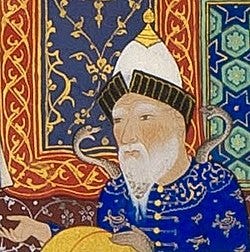
Like most old civilizations, Iranian mythology embraces the futility of human effort to change fate. Despite his plans to kill his grandson after being warned in a dream of the danger to his life, Zahak—Azhodahak—the boy survives to become—drum rolls please--Cyrus the Great.
Many Iranians, however, believe that while fate is real, actions determine the outcome. As an Iranian proverb says, Action from you, blessing from the divine.
As Hafez says, since we can’t change our fate, it is best to find a way to deal with it:
Since our fate was set in our absence at the Creation.
Don’t fret if, at times, it displeases you.
Backgammon, the most popular game in Iran, offers a blueprint for life. In the game, purportedly invented by the Iranian grand vizir Bozorgmehr during the Sassanid dynasty, players must play the hand as dictated by the dice. But they are free to move their pieces the way they see fit. They act depending on their appetite for risk and their expertise. Be too bold, relying only on the dice, and you can lose; be too conservative and avoid taking chances, and a more adventurous opponent beats you handily.


Doing good is always the best strategy, as followers of the ancient Iranian faith, Zoroastrians, believe. Even when our best efforts fall short of personal success, it still affects the fate of the world. They believe that not only our actions but also our thoughts and speech helps the wise god, Ahuramazda, defeat the evil Ahriman, bringing light and peace to the world. This ancient belief underlies many popular Iranian proverbs, such as: You give with one hand, you get with the other.
A pragmatic attitude and trust in science and technology don’t deter modern Iranians from trying to discern the future, bend it to their advantage, or search for ways to escape misfortune. On the last Tuesday of the year, Iranians jump over fire to keep the evil away, and on the thirteenth day of the new year, while celebrating nature outdoors, they knot the blades of grass to ask for a mate or a child.
Believing that our fate is renewed every year as the spring begins, Iranians turn to Hafez on the night of Yalda—winter solstice—to tell their fortunes for the new year to come in March. They open a random page from his collection, trusting that the poem on that page will reflect their fate in the new year. Many—like me--repeat the process on Yalda, last Tuesday of the old year as well as at the start of the new year.


As we approach holidays, we should cherish the opportunities random incidents offer, not agonize over them; getting lost brings the joy of discovering new places as long as we let our hearts enjoy the adventure.
Here are a few lines from Hafez as we celebrate upcoming holidays:
“Don’t delay today’s joy to tomorrow,
Who can guarantee our long existence?
Flowers are precious; Cherish their company
They’ve entered from one door only to depart from another
Oh, musician, this is gathering of friends, sing poems and cheerful songs
How long will you mull over what has happened or what will come?”
Happy Holidays!
Silenced Whispers Updates
We had a wonderful turnout on a beautiful fall evening at the Camden Public Library for my Silenced Whispers author talk. The room was full of thoughtful questions and lively discussion, and we even had a couple who joined us all the way from Indiana!
This event marked the kickoff to the Camden Conference’s 2026 season, which will focus on the Middle East. My gratitude to the library team for their hospitality, to Julia Sagaser for her thoughtful coordination, and to Matthew Storin, Chair of the Camden Conference, for opening the evening.


The Happenings
Saturday, December 13 @ 2 PM - Author Talk at Fowler Library, 1322 Main Street, Concord, MA, 01742. Persian sweets and signed books, packaged in festive bags to lighten your shopping burden, will be offered.
Register here: https://concordlibrary.assabetinteractive.com/calendar/fowler-author-talk-afarin-bellisario/
Thursday, Jan. 29 2026 @ 5:30 PM - Author talk at Portland Public Library, 5 Monument Sq, Portland, ME 04101
The series, “Library Talks,” offers something fresh each time about Iranian modernization, its relevance today, and how my novel, Silenced Whispers, portrays this pivotal era. This format encourages returning guests to discover new insights at every talk. The event will conclude with a Q&A session and book signing.
Until next time;
-Afarin & The Gohar Nameh Team
As always very enjoyable read.
At the heart of Iranian culture, which goes back to the Zoroastrian days, is the concept of Charity and Generosity. There is one big difference between Zoroastrian concept of "doing good" than most other cultures, as it is done as duty and not in hope of getting something good in return in this life or the next.
As one of the Gatha's pieces says (My favourite BTW):
"Ashem vohu vahishtem asti
Oshta asti, Oshta ahmai
Hyat ashai vahishtai ashem"
Rough Translation:
"Doing the right thing is our best gift.
That brings us bliss and happiness.
Happiness is doing right without hope of reward."